
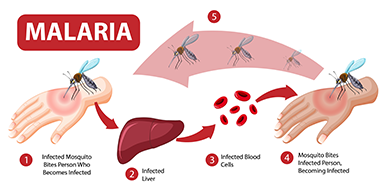
Malaria is a life-threatening disease caused by Plasmodium parasites, transmitted through the bites of infected Anopheles mosquitoes. Despite advancements in medical science, it remains a major public health issue in tropical and subtropical regions. According to WHO, there were an estimated 229 million cases of malaria globally in 2019, with over 409,000 deaths, mostly in sub-Saharan Africa.
Malaria is caused by five Plasmodium species, with P. falciparum and P. vivax being the most common. Transmission occurs when an infected mosquito injects parasites into the bloodstream, which then travel to the liver, mature, and later infect red blood cells.
Symptoms typically appear 10–15 days after infection. Common symptoms include:
Severe malaria may cause anemia, cerebral malaria, respiratory distress, and organ failure. Diagnosis is done through blood tests such as RDTs and microscopic examination.
Effective prevention measures include:
Treatment varies based on the Plasmodium species and severity. Artemisinin-based combination therapies (ACTs) are the first-line treatment for uncomplicated P. falciparum malaria. Severe malaria requires hospitalization and IV medications.
Research continues to develop better drugs, improved insecticides, and mosquito-control technologies. Malaria vaccine development shows promising progress.
Russh Hospitals is the best multi-speciality hospital in Suchitra, offering advanced malaria diagnosis and treatment. With skilled doctors, modern diagnostic tools, and a patient-first approach, Russh Hospitals ensures accurate detection and timely treatment, standing as a trusted healthcare provider in the region.